

A bed bug inspection is a systematic search of the places where people sleep and sit, looking for live bugs, shed skins, eggs and droppings. Done by a trained technician, it confirms whether you have bed bugs, shows where they are and how far they have spread, and sets the plan for treatment. If you are on the Treasure Coast and suspect bed bugs, Ben’s Pest Control starts with a free pest inspection, backed by a free 58-point pest analysis, so you get answers before you spend anything.
This guide covers what the signs look like, how to do a first check yourself, how a professional inspection works, how to prepare, and what a good company should hand you afterward.
TL;DR
- Bed bugs hide within about 8 feet of where people sleep, so an inspection starts at the bed and works outward (CDC).
- Bites alone prove nothing. They can take up to 14 days to appear and look like other skin reactions, so the bugs themselves or their traces must be found.
- Get a professional involved early. Treating on your own first can help the infestation spread (US EPA).
- A good inspection ends with a written finding, a plan and a quote based on what was found, not a flat fee.
- Our inspections are free, and our treatments are child- and pet-friendly and covered by a 30-day money-back guarantee if treatment is not effective.
Table of Contents
- What bed bug evidence looks like
- Where bed bugs hide
- A first check you can do tonight
- How a professional bed bug inspection works
- How much a bed bug inspection costs
- Preparing for the visit
- Families with children and pets
- Rentals and multifamily buildings
- When to book a professional
- Bed bug inspection with Ben’s Pest Control
- FAQ
- Sources
What bed bug evidence looks like
Adult bed bugs are small, flat, reddish-brown insects. They are easy to miss because they hide in tight seams and come out mostly at night. The US EPA lists the signs an inspector looks for:
- Rusty or reddish stains on sheets or mattresses, from crushed bugs or their blood-filled droppings.
- Dark spots about the size of a pinhead, which are bed bug excrement and may bleed on fabric like a marker.
- Eggs and eggshells, roughly 1 mm long.
- Live bugs, and the pale shed skins of growing nymphs.
The CDC adds that a sweet, musty odor can be present, and that infestations occur in houses, apartments, hotels, dorms, buses, trains and cruise ships. They are not a sign of a dirty home. They travel on luggage, clothing and used furniture.
Why bites are not enough
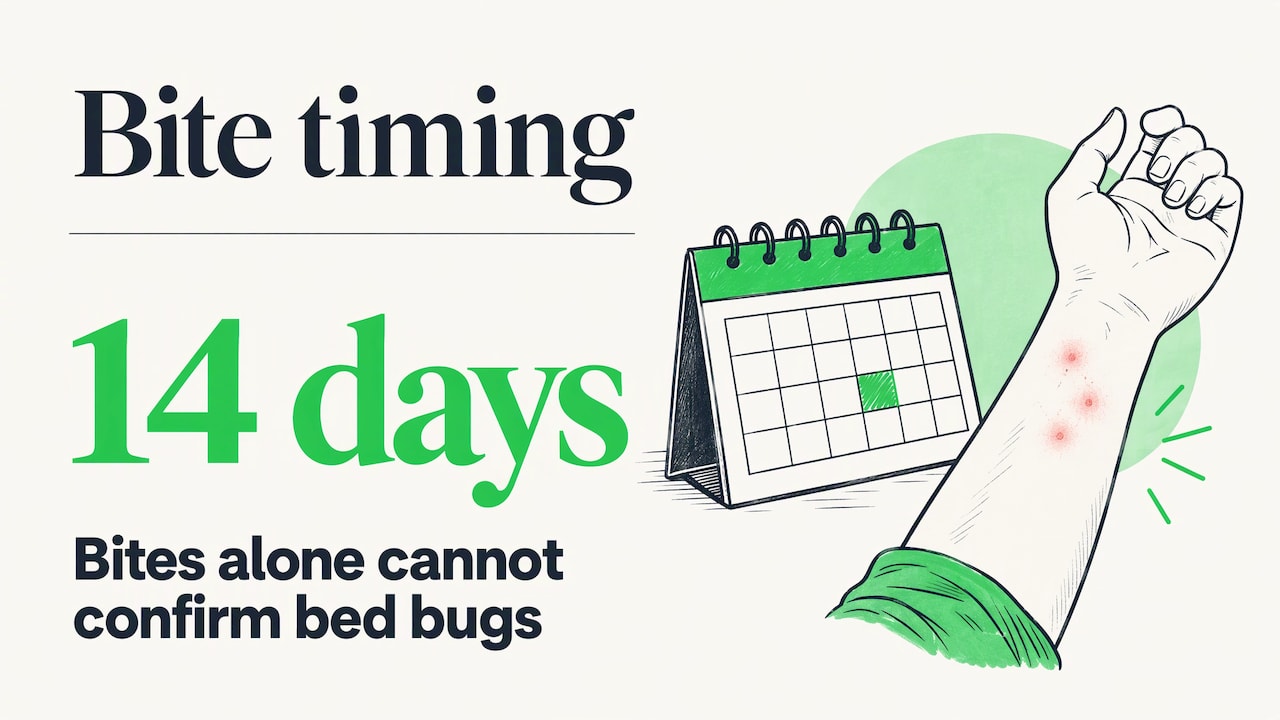
The CDC notes that bed bug bites can take as long as 14 days to develop, may appear randomly or in a line, and often go unnoticed at first because the bug injects an anesthetic while feeding. Some people react with enlarged bite marks or painful swelling, and rarely with a severe allergic reaction. See a doctor for any serious reaction. The Washington State Department of Health advises having a pest control company confirm the identification before you treat anything, because many other bugs and skin conditions look similar.
Where bed bugs hide
The Cleveland Clinic and the CDC both put bed bugs within about eight feet of where you sleep. That is why every inspection starts at the bed. According to the Cleveland Clinic, they gather along mattress seams, in box springs, bed frames and headboards, and, as numbers grow, in cushion seams, drawer joints, wall corners, loose wallpaper and around electrical outlets.
The EPA gives a useful rule of thumb: any crack that would hold a credit card can hide a bed bug. In heavy infestations they spread to couch seams, under wallpaper edges, wall-ceiling junctions and even screw heads.
The CDC also says bed bugs can travel more than 100 feet in a night. A problem in one bedroom can show up in the next room, or in a neighboring unit in a multifamily building.
A first check you can do tonight
A quick look at home is a fair way to decide whether to call, though it is not a substitute for a trained inspection. University extension guidance gives a consistent order of search:
- Strip the bed. UMN Extension says to check mattress edges, corners, stitch lines and the label, then stand the mattress up to check the underside.
- Check the box spring. Look at the wood frame, cracks and screw holes. The stapled fabric underside is a favorite hiding place.
- Move to the frame, headboard and footboard. Check every joint.
- Look behind pictures and at nearby chairs and sofas. Oklahoma State University Extension recommends checking commonly used furniture next, because bed bugs are hard to find.
- Use a bright flashlight. Cornell’s IPM program suggests flushing bugs out of screw holes and gaps, and dampening dark specks: a rusty-brown smear points to bed bug droppings.
Cornell also describes what you are hunting for: nymphs from poppy-seed size upward, with a dark spot on the belly after feeding, and eggs that look like tiny white bean-shaped specks about the length of a comma.
Write down what you find
The New York City health department’s guide recommends keeping a written record of every room and location with signs. Take photos too. A technician can use your notes to focus the professional inspection.
Resist the urge to spray. The EPA warns that trying to treat the problem yourself first can help the infestation spread, as bugs scatter to new rooms.
How a professional bed bug inspection works
A technician does not simply glance at the mattress. Professional inspections follow a methodical routine built around two ideas: bed bugs concentrate where hosts sleep, sit or rest, and evidence has to be found, not guessed at.
The typical visit covers:
- Interview. Where you have seen bites or bugs, how long it has been going on, and whether you have traveled or brought in used furniture.
- Sleeping areas first. Mattress, box spring, frame and headboard, taken apart where necessary. The EPA says to expect the pest professional to inspect the residence and take apart furniture if needed.
- Seating and surrounding areas. Sofas, recliners, nightstands, baseboards, outlets and the edges of carpet.
- Tools. Flashlight or headlamp, magnifier, inspection mirror, forceps, screwdrivers and pry tools, according to industry best practices published by the National Pest Management Association.
- Monitors. Traps placed under furniture legs or around the bed can catch bugs between visits. Oklahoma State recommends them because bugs are so hard to see.
- Adjacent rooms. A thorough inspector does not stop at the room with the complaint.
Canine inspections
Some providers use scent-detection dogs. Industry standards call for the canine team to hold current independent certification, and for a dog’s alert to be confirmed by a visual find or monitoring device before treatment. A dog speeds up the search of large spaces, but it is a screening tool, not a replacement for the technician’s eyes.
What the inspection should give you
The NYC health department describes what a good company does: it inspects before quoting, provides a written inspection report and action plan, bases the price on what the inspection found rather than a flat fee, and educates you on prevention. Oklahoma State adds that the company should show you where the bugs were found.
That is a useful standard for any visit, ours included. If you leave the inspection without knowing which rooms are affected, how heavy the problem is and what happens next, the inspection did not do its job.
How much a bed bug inspection costs
Inspection fees vary by company and by region, and treatment prices depend on the findings: number of rooms, level of infestation, clutter and treatment method. Health officials note that quotes should follow the inspection and not precede it. That is the reason we start with a free inspection. You see what is there before anyone asks you to commit to a treatment.
Preparing for the visit
Preparation affects results. Oklahoma State’s entomologists stress that no single method eliminates bed bugs. Inspection, monitoring, home preparation and careful pesticide use by a professional all work together, and the homeowner’s preparation can decide whether a treatment succeeds.
Their preparation guidance includes:
- Reduce clutter so heat and treatment can reach hiding places.
- Keep walking pathways about 36 inches wide.
- Pull furniture at least two feet from walls.
- If you discard infested furniture, rip the fabric and damage the frame so no one else takes it home.
Your technician will give you a preparation checklist specific to the treatment. Ask for it at the inspection so you are not guessing.
Questions to ask any pest professional
Oklahoma State suggests six questions that hold well for any company:
- Where were bed bugs found?
- How heavy is the infestation?
- What treatment options are there? Heat and chemical are often combined.
- How many visits are expected, and are they all in the initial cost?
- Is post-treatment monitoring included, with a follow-up visit about 3 to 4 weeks later?
- What preparation do I need to complete?
The NYC health department says to plan on at least two treatment visits plus a third visit to confirm the bugs are gone, with severe or cluttered cases needing more. The EPA agrees that very few infestations are controlled in one treatment. Plan for a process, not a single appointment.
Families with children and pets
If you have kids or animals, ask how the treatment is applied, where products go, how long you need to stay out of treated rooms and when bedding can be used again. Our treatments are child- and pet-friendly, and the technician walks you through the specifics for your home. Tell the technician about infants, pets, allergies or anyone with a health condition before the work begins. Anyone with a medical concern should check with their doctor.
Rentals and multifamily buildings
Bed bugs move through walls, pipes and hallways. If you manage rental property, inspection should cover the units above, below and beside the one reporting the problem. California’s state guidance, for example, asks owners to respond to a tenant complaint within 48 hours and use a licensed pest control operator, and it advises inspecting adjacent units. Rules differ by state, so check Florida requirements and your lease terms. Our page on landlord pest responsibility on the Treasure Coast explains how this works locally.
When to book a professional
Book as soon as you find any of these:
- Live bugs, shed skins or eggs anywhere in the home.
- Rusty spots or dark specks on bedding or the mattress seams.
- Unexplained bites that keep appearing, especially after travel or bringing in used furniture.
- A neighbor, tenant or hotel stay that turned out to have bed bugs.
Early inspection matters because a small infestation is confined to a few spots and is far simpler to handle than one that has spread through several rooms.
Bed bug inspection with Ben’s Pest Control
We are a family-owned company in Port St. Lucie with over 30 years of experience. Our licensed professionals serve St. Lucie and Martin counties, including Fort Pierce, Vero Beach, Jensen Beach, Palm City, Stuart, Hobe Sound, Port Salerno and Sewall’s Point. Every inspection comes with a free 58-point pest analysis, designed to find hidden infestations and tailor the treatment to your home. You also have direct access to the owner.

If treatment is not effective within 30 days, our money-back guarantee applies, and follow-up treatments are part of how we work. Read more about our bed bug treatment, see how we handle bed bugs in Port St. Lucie, or see our approach in Fort Pierce. Ready to book? Start at our homepage and ask for your free inspection.
FAQ
How do professionals check for bed bugs?
They inspect the bed first, then nearby furniture, walls, outlets and adjoining rooms, using a flashlight, magnifier, mirror and hand tools. Monitors or certified scent-detection dogs may support the search, and any alert is confirmed by finding evidence.
Can you feel bed bugs crawling on you?
Usually not. The CDC says bed bugs inject an anesthetic and anticoagulant when they feed, so bites often go unnoticed. Marks can take up to 14 days to appear, which is why finding the bugs or their traces matters more than the bites.
How many visits does a bed bug problem take?
The EPA says very few infestations are controlled with one treatment. The NYC health department advises expecting at least two treatment visits and a follow-up visit to confirm the bugs are gone, with more for severe or cluttered cases.
Should I treat bed bugs myself before the inspection?
It is better not to. The EPA says treating on your own first can help the infestation spread. Document what you see, leave the bed as it is, and get an inspection so treatment targets the right rooms.
Sources
- How to Find Bed Bugs, US EPA
- Hiring a Pest Management Professional for Bed Bugs, US EPA
- About Bed Bugs, CDC
- Bed Bugs, Washington State Department of Health
- Bed Bugs: Bites, Identification, Prevention, Cleveland Clinic
- Bed bug prevention and control in the home, UMN Extension
- Help! I Think I Have Bed Bugs! T-4419, Oklahoma State University Extension
- Inspection of Household Items to Find Bed Bugs, Cornell IPM
- Preventing and Getting Rid of Bed Bugs Safely, NYC Department of Health
Recommended


